 CRAFTS AND STONE
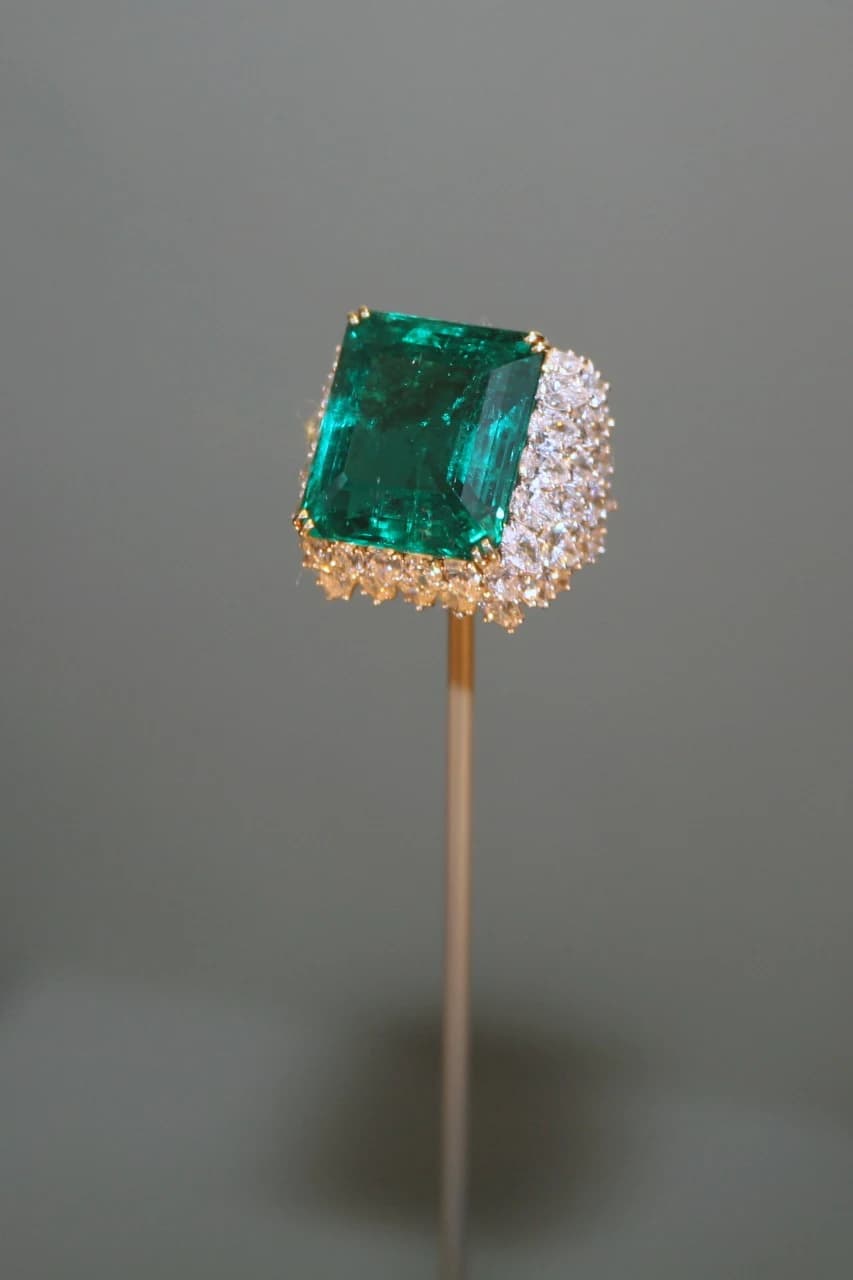
What Clarity Enhancement Means
Most natural emerald contains surface-reaching fractures from formation. Clarity enhancement fills these with a filler — most commonly cedarwood oil or synthetic resin — to reduce their visibility and improve apparent transparency.
Why It's Standard Practice
Because virtually all natural emerald requires some degree of fracture filling to be sold as a finished gem, oiling is treated by gemological labs as a routine, disclosed enhancement rather than a defect — provided it's disclosed at sale.
Grading Terminology
Labs such as GIA and Gübelin grade oiling on a scale from "None" through "Minor," "Moderate," to "Significant," based on the quantity of filler observed and its effect on clarity.
Stability and Care
Oil-filled fractures can dry out or be drawn out by heat, ultrasonic cleaning, or solvents, which is why emeralds should be cleaned only with a soft cloth and warm water, never in an ultrasonic cleaner.
Price Impact
Untreated ("no oil") emeralds command a significant premium over even minor-oiled stones of the same size and colour, since untreated clarity at that saturation is rare.