 CRAFTS AND STONE

Where It Comes From
"Skardu aquamarine" is the trade name for material from Shigar Valley and its tributary valleys — Braldu, Basha and the area around Dassu and Stak Nala — all within Skardu District in Gilgit-Baltistan. The name refers to the district and trading point rather than a single mine; output is spread across several small workings in this pegmatite-rich stretch of the Karakoram.
The Deposit Type
This is granitic pegmatite mineralisation, the same broad process responsible for most of the world's fine aquamarine, topaz and tourmaline localities. As a granite body cools, its last, most water- and mineral-rich fraction concentrates into pegmatite dikes, and where that fluid finds open cavities — miarolitic pockets — it can grow large, well-formed crystals rather than the fine-grained mass typical of ordinary granite.
Color
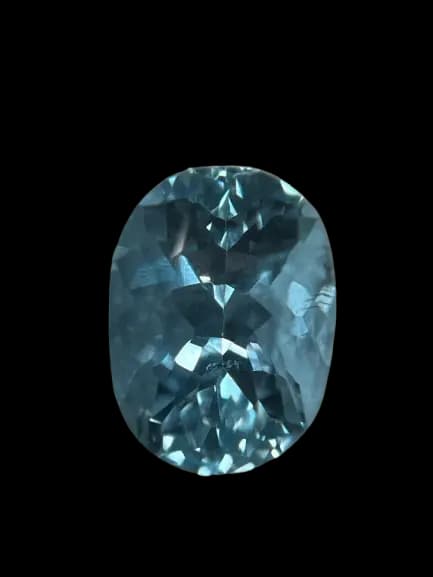
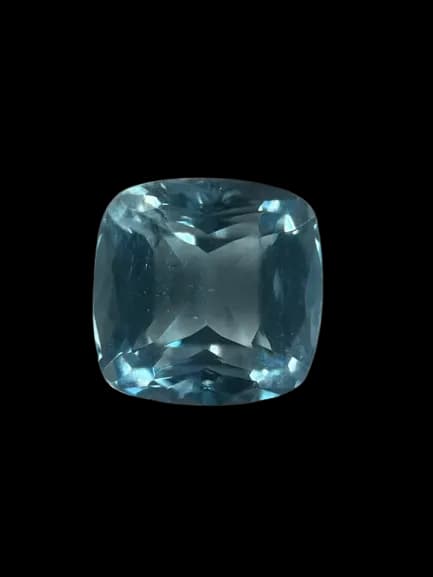
Skardu material ranges from pale blue to a strong, saturated blue-green, with the finest stones reaching a rich blue comparable to material sold under the "Santa Maria" trade description from Brazilian and Mozambican sources. As with aquamarine everywhere, a natural greenish component is common and is routinely reduced by heat treatment to concentrate the blue.
A Locality Known for Large, Clean Crystals
Pegmatite pockets that stay undisturbed while a crystal grows tend to produce cleaner material than deposits formed under more turbulent conditions, and Shigar's pockets have a strong track record for exactly that — large, gemmy, well-terminated aquamarine crystals reported repeatedly in specialist gem literature over the past several decades. This is a genuine locality strength rather than a claim specific to any one piece: eye-clean material and larger cut stones are more available here than from many aquamarine sources.
Associated Minerals
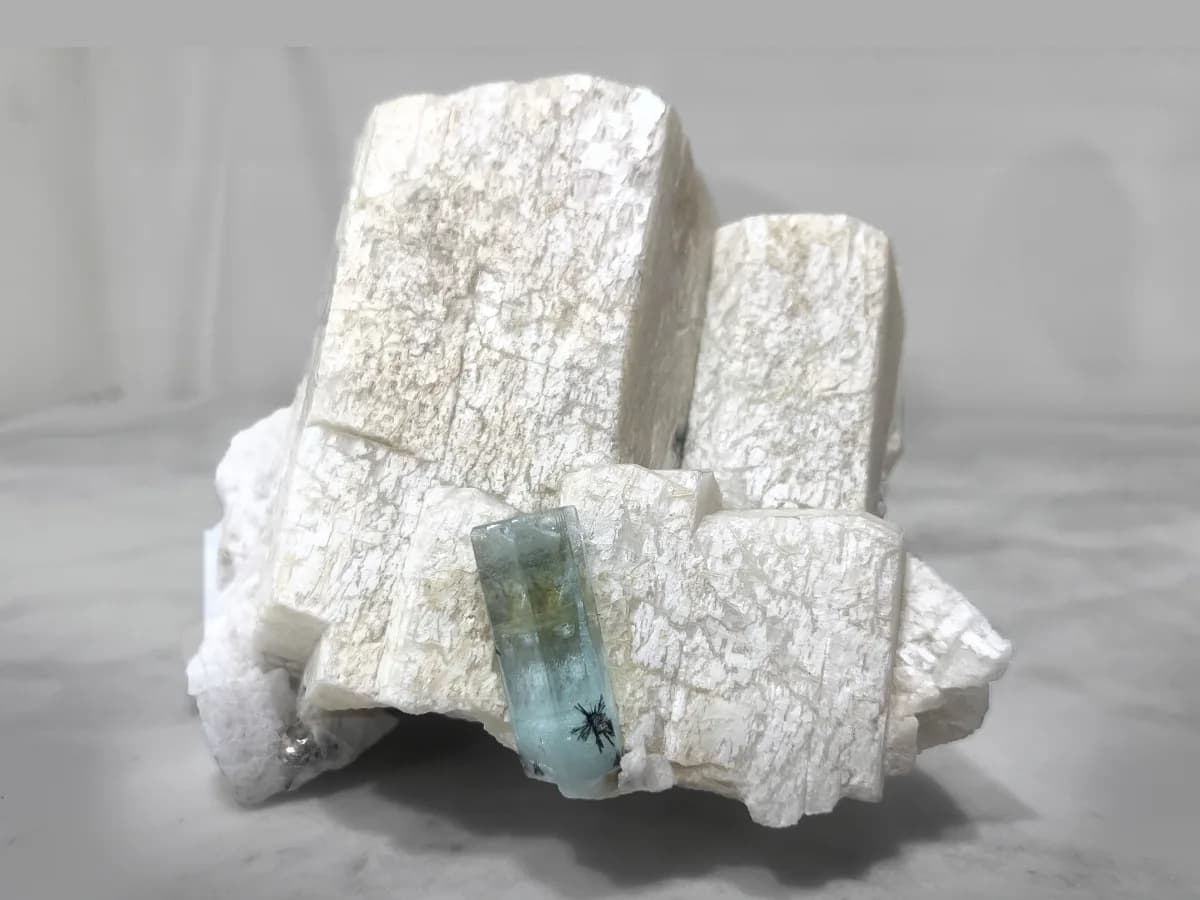
Aquamarine-bearing pockets in this belt commonly also produce muscovite mica, feldspar, and in nearby pockets topaz and tourmaline — the same pegmatite family covered in our regional guide to Pakistan's gemstone belt. A specimen with aquamarine still attached to its pocket minerals is a genuinely different (and often more valuable) object than a loose faceted stone.
Optical and Physical Properties
Aquamarine is the blue variety of beryl, coloured by trace iron. Refractive index runs approximately 1.577 to 1.583, specific gravity 2.68 to 2.72, and hardness is 7.5 to 8 on the Mohs scale. It is dichroic, showing blue down one optical axis and a paler, near-colourless tone down the other — cutters orient the rough to favour the stronger blue face-up.
Treatment
Heating to reduce the greenish component and concentrate blue is close to universal in the commercial aquamarine trade, including material from this region, and is generally considered such standard practice that it is often not individually disclosed the way emerald oiling is. Buyers who want a specific answer on a given stone should still ask.
Identification
Aquamarine is distinguished from similarly coloured stones — blue topaz, blue zircon, glass imitations — by its refractive index and specific gravity, both straightforward for a lab to check. Confirming Skardu as the specific origin among aquamarine sources is a trace-element and inclusion question for a gemological laboratory, not something to be judged by eye.
Durability
At 7.5 to 8 on the Mohs scale, aquamarine wears well in rings and everyday jewellery, and it lacks the pronounced cleavage that makes some harder gems more fragile. It is a genuinely practical stone for regular wear.
Mining Reality
Workings across Shigar, Braldu and the surrounding valleys are small-scale and artisanal, at altitude, with a short working season. Supply is naturally irregular — a productive pocket can be exhausted in one season, and the next may not appear nearby for years.
Grading
Aquamarine is graded primarily on colour saturation, with strong, pure blue commanding the highest prices, followed by clarity, cut, and carat weight. Because eye-clean material is comparatively available from this locality, cut quality and colour tend to matter more here than clarity does in separating an average stone from a fine one.
Pricing
Strongly saturated, clean Skardu material is priced competitively with — and in the finest examples, close to — the Brazilian and Mozambican "Santa Maria" goods used as the market's benchmark for top-quality aquamarine. Pale, included material sits well below that, as it does from any source.
Care
Aquamarine is one of the more forgiving coloured stones: warm soapy water and a soft brush is sufficient, and an ultrasonic cleaner is generally safe for untreated or simply heated stones without significant fractures. Avoid extended exposure to strong light, which can affect colour in some beryl over the very long term.
Common Misconceptions
That "Skardu aquamarine" names one mine: it names a district and trading point covering several distinct valleys and workings. That size or clarity alone confirms origin: both are locality tendencies, not proof, and only laboratory analysis can confirm where a specific stone came from. That untreated aquamarine is common: heat treatment is close to standard practice across the trade, this region included.